
Loka Forums
Type /register while in-game to register for a forums account.
You are using an out of date browser. It may not display this or other websites correctly.
You should upgrade or use an alternative browser.
You should upgrade or use an alternative browser.
Posting a different fruit every day until we obtain a Crypt head
- Thread starter Evil_X
- Start date
- Status
- Not open for further replies.


Pac_Man_
Well-Known Member
A good deal of searching and also taking advantage of the fact that basically every flowering plant produces some form of fruit.How are u guys still finding fruits
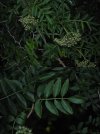
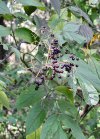
January 3rd, Day 959: Sambucus australis
Fruit Info: “Sambucus australis is a species of tree in the family Adoxaceae. It is native to South America.
Sambucus australis ranges from southeastern and southern Brazil to Paraguay, Uruguay, and northeastern Argentina.” - another entire Wikipedia article
Fruit Tier: A
Pac_Man_
Well-Known Member
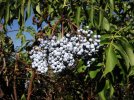
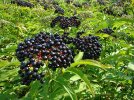
January 5th, Day 960: Blue Elderberry
Fruit Info: For the fruit of the day today we have the Blue Elderberry / Blue Elder / Sambucus cerulea. This fruit is blue-ish black color, although you’d be forgiven for not being able to tell from this picture. It is found throughout various regions in the western United States, Mexico and I’m British Columbia.
Fruit Tier: B
Fruit Info: For the fruit of the day today we have the Blue Elderberry / Blue Elder / Sambucus cerulea. This fruit is blue-ish black color, although you’d be forgiven for not being able to tell from this picture. It is found throughout various regions in the western United States, Mexico and I’m British Columbia.
Fruit Tier: B
Pac_Man_
Well-Known Member
January 7th, Day 962: American Red Elder
Fruit Info: For today our fruit is the American Red Elder, Sambucus pubens. This fruit is a native to North America where it serves as a major food source for some birds. That being said, it has an extremely bitter taste and can cause digestive problems for humans if they eat enough of them.
Fruit Tier: B
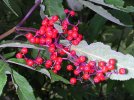
Fruit Info: For today our fruit is the American Red Elder, Sambucus pubens. This fruit is a native to North America where it serves as a major food source for some birds. That being said, it has an extremely bitter taste and can cause digestive problems for humans if they eat enough of them.
Fruit Tier: B
Pac_Man_
Well-Known Member
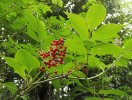
January 9th, Day 964: Red-Berried Elder
Fruit Info: Sambucus racemosa is the red berried elder and it will be our fruit of the day. It is a native to Europe, North America, and Asia where it grows mostly in moist woodlands. When eaten raw these fruits are poisonous but can be cooled in a way that removes their toxicity.
Fruit Tier: S
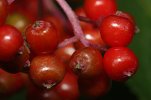
Fruit Info: Sambucus racemosa is the red berried elder and it will be our fruit of the day. It is a native to Europe, North America, and Asia where it grows mostly in moist woodlands. When eaten raw these fruits are poisonous but can be cooled in a way that removes their toxicity.
Fruit Tier: S
Pac_Man_
Well-Known Member
January 10th, 965: European Elderberry
Fruit Info: The European Elder, European Elderberry, European Black Elderberry, European Black Elder, Black Elder, Black Elderberry and Tramman are all names for our fruit of the day, Sambucus nigra. Like many elderberries, this fruit has toxins that are potentially dangerous if consumed raw. Despite these toxins the fruit can be cooked and then consumed in the forms of jelly, jam, wine, chutney and pontack sauce.
Fruit Tier: B
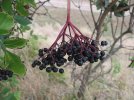
Fruit Info: The European Elder, European Elderberry, European Black Elderberry, European Black Elder, Black Elder, Black Elderberry and Tramman are all names for our fruit of the day, Sambucus nigra. Like many elderberries, this fruit has toxins that are potentially dangerous if consumed raw. Despite these toxins the fruit can be cooked and then consumed in the forms of jelly, jam, wine, chutney and pontack sauce.
Fruit Tier: B
Pac_Man_
Well-Known Member
January 11th, Day 966: Guelder Rose
Fruit Info: Viburnum opulus is a somewhat acidic fruit that you can find growing in Europe, Northern Africa, and Central Asia. While you can eat this fruit in forms such as jelly, it is not recommended to consume very much as it’s is mildly toxic and can cause problems like vomiting if you eat too much. Interestingly this fruit can be found throughout Ukrainian folklore.
Fruit Tier: A
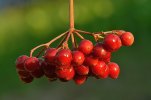
Fruit Info: Viburnum opulus is a somewhat acidic fruit that you can find growing in Europe, Northern Africa, and Central Asia. While you can eat this fruit in forms such as jelly, it is not recommended to consume very much as it’s is mildly toxic and can cause problems like vomiting if you eat too much. Interestingly this fruit can be found throughout Ukrainian folklore.
Fruit Tier: A
Pac_Man_
Well-Known Member
January 12th, Day 967: Sheepberry
Fruit Info: Referred to scientifically as Viburnum lentago, some of the other names for this fruit of the day include the Sheepberry, Nannyberry, and Sweet Viburnum. As is suggested by the name Sweet Viburnum, this fruit is both edible and it has a sweet flavor. Being edible is pretty uncommon in this genus so it’s a nice change of pace.
Fruit Tier: B
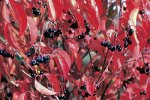
Fruit Info: Referred to scientifically as Viburnum lentago, some of the other names for this fruit of the day include the Sheepberry, Nannyberry, and Sweet Viburnum. As is suggested by the name Sweet Viburnum, this fruit is both edible and it has a sweet flavor. Being edible is pretty uncommon in this genus so it’s a nice change of pace.
Fruit Tier: B
Pac_Man_
Well-Known Member
January 14th, Day 969: Viburnum furcatu
Fruit Info: “Viburnum furcatum, the forked viburnum or scarlet leaved viburnum, is a species of flowering plant in the family Adoxaceae (formerly Caprifoliaceae). Growing to 4 m (13 ft) tall and broad, it is a substantial deciduois shrub with rounded oval bronze-green leaves, turning red in autumn. Scented white flower-heads resembling those of lacecap hydrangeas are borne in summer, followed by black fruits.” - the whole Wikipedia article.
Fruit Tier: C
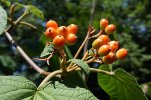
Fruit Info: “Viburnum furcatum, the forked viburnum or scarlet leaved viburnum, is a species of flowering plant in the family Adoxaceae (formerly Caprifoliaceae). Growing to 4 m (13 ft) tall and broad, it is a substantial deciduois shrub with rounded oval bronze-green leaves, turning red in autumn. Scented white flower-heads resembling those of lacecap hydrangeas are borne in summer, followed by black fruits.” - the whole Wikipedia article.
Fruit Tier: C
Pac_Man_
Well-Known Member
January 15th, Day 970: Viburnum erubescens
Fruit Info: “Viburnum erubescens, the reddish viburnum, is a species of flowering plant in the family Viburnaceae. It is native to Sri Lanka, India, Nepal, Bangladesh, China, Myanmar, and Vietnam. It is a deciduous shrub that grows in forests and scrub. Flowers are fragrant and bloom April to June. The unimproved species is available from commercial suppliers, as is a putative variety, Viburnum erubescens var. gracilipes, the slender blushing viburnum, and a number of cultivars, including 'Foster', 'Lloyd Kenyon', 'Milke Danda', and 'Ward van Teylingen'.”
- the whole Wikipedia article on the plant and fruit.
Fruit Tier: B
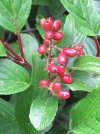
Fruit Info: “Viburnum erubescens, the reddish viburnum, is a species of flowering plant in the family Viburnaceae. It is native to Sri Lanka, India, Nepal, Bangladesh, China, Myanmar, and Vietnam. It is a deciduous shrub that grows in forests and scrub. Flowers are fragrant and bloom April to June. The unimproved species is available from commercial suppliers, as is a putative variety, Viburnum erubescens var. gracilipes, the slender blushing viburnum, and a number of cultivars, including 'Foster', 'Lloyd Kenyon', 'Milke Danda', and 'Ward van Teylingen'.”
- the whole Wikipedia article on the plant and fruit.
Fruit Tier: B
Pac_Man_
Well-Known Member
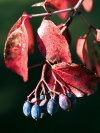
January 17th, Day 972: Wayfarer
Fruit Info: The wayfarer is a type of mildly toxic fruit native to central, southern and Western Europe, along with northwestern Africa and Southwest Asia. Viburnum lantana cam cause problems like vomiting if consumed in large quantities.
Fruit Tier: B
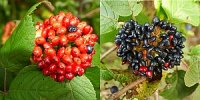
Fruit Info: The wayfarer is a type of mildly toxic fruit native to central, southern and Western Europe, along with northwestern Africa and Southwest Asia. Viburnum lantana cam cause problems like vomiting if consumed in large quantities.
Fruit Tier: B
Pac_Man_
Well-Known Member
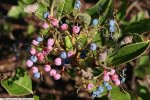
January 18th, Day 973: Witch Hobble
Fruit Info: Today for our fruit of the day we have the witch hobble, Viburnum lantanoides, and it is a native to the eastern US and Canada. “The fruits can be eaten raw or made into jelly.” Reads the entire used section of the Wikipedia article. So yeah, neat.
Fruit Tier: B
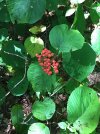
Fruit Info: Today for our fruit of the day we have the witch hobble, Viburnum lantanoides, and it is a native to the eastern US and Canada. “The fruits can be eaten raw or made into jelly.” Reads the entire used section of the Wikipedia article. So yeah, neat.
Fruit Tier: B
Pac_Man_
Well-Known Member
January 19th, Day 974: David Viburnum
Fruit Info: “Viburnum davidii, the David viburnum, is a species of flowering plant in the family Adoxaceae native to western China. Growing to 1.5 m (5 ft) tall and broad, it is an evergreen shrub with large, glossy, oval leaves up to 15 cm (6 in) long. Each leaf is deeply veined lengthwise with three curved lines. Round clusters of tiny white flowers are produced in late spring, followed in late summer and autumn by oval blue fruits. Both male and female plants are required to produce fruit.” - The Wikipedia article on the plant that grows today’s fruit.
Fruit Tier: A
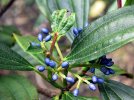
Fruit Info: “Viburnum davidii, the David viburnum, is a species of flowering plant in the family Adoxaceae native to western China. Growing to 1.5 m (5 ft) tall and broad, it is an evergreen shrub with large, glossy, oval leaves up to 15 cm (6 in) long. Each leaf is deeply veined lengthwise with three curved lines. Round clusters of tiny white flowers are produced in late spring, followed in late summer and autumn by oval blue fruits. Both male and female plants are required to produce fruit.” - The Wikipedia article on the plant that grows today’s fruit.
Fruit Tier: A
Pac_Man_
Well-Known Member
January 20th, Day 975: Mapleleaf Viburnum
Fruit Info: “Viburnum acerifolium, the mapleleaf viburnum, maple-leaved arrowwoodor dockmackie, is a species of Viburnum, native to eastern North America from southwestern Quebec and Ontario south to northern Florida and eastern Texas. It is adapted for USDA hardiness zones of 4 to 8” - Wikipedia
Fruit Tier: A
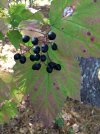
Fruit Info: “Viburnum acerifolium, the mapleleaf viburnum, maple-leaved arrowwoodor dockmackie, is a species of Viburnum, native to eastern North America from southwestern Quebec and Ontario south to northern Florida and eastern Texas. It is adapted for USDA hardiness zones of 4 to 8” - Wikipedia
Fruit Tier: A
Pac_Man_
Well-Known Member
January 21st, Day 976: Birchleaf Viburnum
Fruit Info: The bright red color of these berries helps them at being more attractive to birds, a valuable tool for a type of plant that requires birds to help them spread. Viburnum betilifolium is also native to China and the island of Taiwan.
Fruit Tier: A
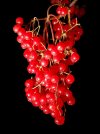
Fruit Info: The bright red color of these berries helps them at being more attractive to birds, a valuable tool for a type of plant that requires birds to help them spread. Viburnum betilifolium is also native to China and the island of Taiwan.
Fruit Tier: A
- Status
- Not open for further replies.
Install the app
How to install the app on iOS
Follow along with the video below to see how to install our site as a web app on your home screen.
Note: This feature may not be available in some browsers.